Wednesday, March 12, 2008

Nearly No-Knead Bread

I. Made. Bread.


And not just any bread. Good bread.


Bakery-quality...


Crisp-crusted...


Tangy, moist-crumbed bread.


There are those who must be thanked. 1) The Human Vacuum, who gave me a subscription to Cook's Illustrated this Valentine's Day, and 2) the fine people in America's Test Kitchens (where Cook's is produced), who labored mightily to improve the already miraculous No Knead Bread recipe recently popularized by the NYT's Mark Bittman, and succeeded.

If you are, like me, yeastphobic and shy of bread baking, this is the way to begin. First, watch the video of Bittman making his version of the bread, complete with a demonstration of the cool technique where you cook it in a Dutch oven. Then read the article in the Times that explains why letting the dough sit for 12-24 hours works gluten miracles.

And then listen up while I tell you about the tweaks in Cook's Illustrated: The flavor is improved by adding a little beer and a little vinegar. The texture is improved by reducing the liquid and indulging in a smidge of kneading between the first (super long) rise, and the second (shorter) rise. Just 15 quick knead. Also, Cook's offers a handy tip: when you turn out the dough, do it on a piece of parchment paper and then use the paper to lower the ball of bread dough into the already hot Dutch oven. Just leave the paper in there while it cooks and spare yourself burnt hands at all stages of the process.

Cook's Illustrated is protective of its innovations (and rightly so), so I have made a moral compromise and annotated the NYT recipe below rather than copying the Cook's recipe. But you should really subscribe.

***
Here's the Times recipe, with my notes on the Cook's tweaks in itals:

No Knead Bread (or in this case Nearly No Knead Bread)

Adapted from Jim Lahey, Sullivan Street Bakery and Cook's Illustrated
Time: About 1½ hours plus 14 to 20 hours’ rising

3 cups all-purpose or bread flour, more for dusting
¼ teaspoon instant yeast
1¼ teaspoons salt
Cornmeal or wheat bran as needed. I skipped this and just used a little more flour
3/4 cup plus 2 Tablespoons room temperature water
1/4 cup plus 2 Tablespoons light flavored American lager beer, like Bud
1 Tablespoon white vinegar

1. In a large bowl combine flour, yeast and salt. Add 1 5/8 cups water 3/4 cup plus 2 Tablespoons room temperature water, plus 1/4 cup plus 2 Tablespoons light flavored American lager beer plus 1 Tablespoon white vinegar, and stir until blended; dough will be shaggy and sticky. Cover bowl with plastic wrap. Let dough rest at least 12 hours, preferably about 18, at warm room temperature, about 70 degrees.

2. Dough is ready when its surface is dotted with bubbles. Lightly flour a work surface and place dough on it; sprinkle it with a little more flour and fold it over on itself once or twice. Cover loosely with plastic wrap and let rest about 15 minutes.

3. Using just enough flour to keep dough from sticking to work surface or to your fingers, gently and quickly shape dough into a ball. Generously coat a cotton towel (not terry cloth) with flour, wheat bran or cornmeal; put dough seam side down on towel and dust with more flour, bran or cornmeal.

Knead the dough 15 times, then form into a ball. Optional: Place on a sheet of parchment paper. Cover with another cotton towel and let rise for about 2 hours. When it is ready, dough will be more than double in size and will not readily spring back when poked with a finger.

4. At least a half-hour before dough is ready, heat oven to 450 500 degrees. Put a 6- to 8-quart heavy covered pot (cast iron, enamel, Pyrex or ceramic) in oven as it heats. When dough is ready, carefully remove pot from oven. Slide your hand under towel and turn dough over into pot, seam side up; it may look like a mess, but that is O.K. Shake pan once or twice if dough is unevenly distributed; it will straighten out as it bakes. Lift dough into pan on the sheet of parchment and reduce heat to 425. Cover with lid and bake 30 minutes, then remove lid and bake another 15 to 30 minutes, until loaf is beautifully browned. Cool on a rack.

Yield: One 1½-pound loaf.

Tuesday, March 11, 2008

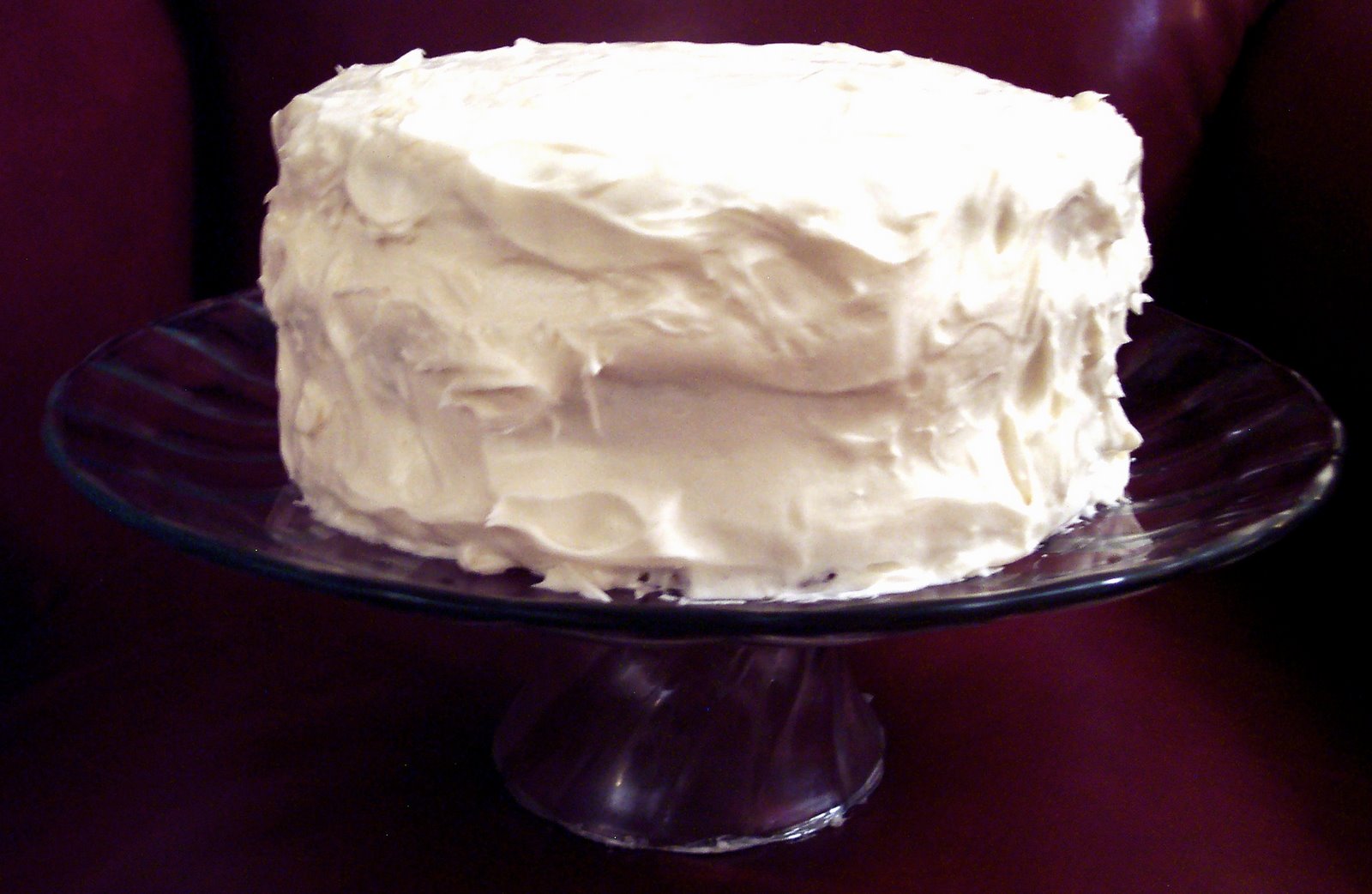
Hummingbird Cake


I've been hesitating over whether to post this cake for months. Because it's sort of delicious and sort of disgusting at the same time.

When the holiday season descends, some people rewatch It's a Wonderful Life, some people read The Night Before Christmas aloud en famille. And some of us--a very special sorority, to be sure--flip through the recipe boxes of their ancestors.

For some reason, I was struck this year by the fact that my granny's recipe box, a flimsy tin number painted with orange flowers, contains about a million recipes involving a can of crushed pineapple. There must have been a craze for the stuff that coincided with my granny's most prolific young-wifely recipe clipping phase.

This mad assemblage of spice cake, banana, and canned pineapple under a blanket (really more like a duvet, actually) of cream cheese frosting could not be ignored. It was ridiculously fun for the ToastWomen to make. Truly, you have not lived until you have poured one and a half cups of "salad oil" into a bowl of cake batter. Even now, an image of the Pyrex measuring cup, overflowing with oil, looms golden and horrifying in my mind's eye.

The result was headachingly sweet. One thin slice could send the vulnerable into diabetic coma. To my mind, it actually tasted retro. This one is, I think, for dedicated nostalgic cooks only. And yet...the taste sticks with you. It's "different," with all that the use of the term implies, good and bad. In fact, I wouldn't mind having a slice right now.


***
Hummingbird Cake
from my granny's recipe box, with granny-style directions preserved

For the cake:
3 cups flour
2 cups sugar
1 teaspoon salt
1 teaspoon cinnamon
3 eggs, beaten
1 1/2 cups salad oil
1 1/2 teaspoon vanilla
1 can 8 oz crushed pineapple, unstrained
2 cups chopped pecans, divided
2 cups chopped bananas

Combine dry ingredients in large mixing bow, add eggs and oil, stir
until moistened. DO NOT BEAT. Stir in vanilla, pineapple, 1 cup nuts and
bananas. Spoon batter into 3 9" greased pans/ Bake at 350 degrees for
25-30 minutes. Cool in pan 10 minutes.

For the frosting:
2 8 oz packages cream cheese, softened
1 cups butter, softened
2 package 16 oz each of powdered sugar
2 teaspoons vanilla

Combine cream cheese and butter until smooth, add powdered sugar slowly
and beat until fluffy. Stir in vanilla, put nuts on top (I didn't, as you can see, because I'm not a fan of nuts in dessert).

[ToastPoint notes: Obviously, you should frost the cake, using the usual layer cake method, before putting the nuts on top. Serve on a vintage-y cake plate. Store in refrigerator, or the bananas continue to ripen in a scary way.]

Wednesday, February 27, 2008

ToastPoint Goes Dutch


ToastPoint recently had occasion to take an excursion to the Low Countries, and what did she find there? Dutch babies! No, not the offspring of Amsterdammers (though I'm sure there are some of those around): Delicious fluffy pancakes, in their bite-sized manifestation in this case. If the small American pancake is a silver dollar pancake, then I suppose these are silver guilder pancakes.

The Human Vacuum and I savored this light-yet-filling treat at an unlikely location: A tiny basement level coffeeshop/Internet cafe right next door to the Anne Frank House. After contemplating wartime privation and tragedy, nothing will cheer you up like a peek at your email and a late breakfast of sweet, eggy, buttery, sugar-dusted treats (or, oddly, a pastrami sandwich, if you prefer). The juxtaposition of the sober, modern museum facade and the cheery red canopy of the cafe is a perfect example of truth in advertising.

If you can't make it to Amsterdam, there's an appealing recipe for making your own jumbo version at Orangette.

Cucumber Tangerine Salad with Goat Cheese and Pine Nuts


The name pretty much tells you everything you need to know--this salad sounds like a crazy person assembled it. But it tastes like that crazy person was really an idiot savant de salade. It's in the same spirit as the even crazier, even more delicious dish at the longstanding D.C. Greek and Turkish tapas hotspot, Zatiniya. There, they call it "Portakal Salatasi" which the menus describes as "oranges, red onion, pine nuts, kalamata olives and feta with orange blossom dressing."

You should really go to Zantiniya (Hint: Go early so that don't have to wait with the beautiful people at the bar for an eternity. The place is very chic) and have their version. But failing that, this is a tasty, quickie at-home version that omits the olives and is therefore slightly less threatening and more of a go-along-to-get-along side salad.

***
Cucumber Tangerine Salad with Goat Cheese and Pine Nuts

In a dry pan, gently toast until golden:
1/4 cup pine nuts

Cut in quarters lengthwise:
1 English seedless cucumber (or a normal cuke, if that's what you have)

Peel and de-pith:
1 tangerine, mandarin, or other small orange-like fruit
Pull segments apart and cut each one in half.

Combine all of the above in a bowl, and toss with:
1 Tablespoon white vinegar (I used rice wine vinegar)
1 teaspoon rosewater or orangeflower water (optional)
1/2 teaspoon salt
black pepper to taste

Crumble on top:
2 Tablespoons goat cheese

Refrigerate until serving.

Indian Asparagus


I love asparagus. We here in the ToastPoint household buy asparagus nearly every time we go to the store, regardless of season (take that Michael Pollan!). But as good as basic steamed asparagus is, sometimes you want something a little more interesting. Especially in the winter when puttering around the kitchen and fussing with multiple hot pans is more appealing.

And how can you lose by adding oil, spices, yogurt, tomato, and nuts? The result is really good (if not nearly as good for you as the steamed version), and suitable for serving to foodies.

Disclosure: The fine people at The Lisa Ekus Group sent me this cookbook (for free!) umpteen months ago and I have been sitting on this recipe since then, because I am an ungrateful wretch. It's a pretty book full of pretty food, and would be good for those who have mastered the basics and are in the market for a take-it-to-the-next level Indian cookbook for dinner party recipes.

***
Indian Asparagus with Pistachios
(based
on Hari Nayak and Vikas Khanna's Sweet and Sour Asparagus with Cashews from Modern Indian Cooking)

Boil for 2 minutes, plunge into cold water, and then set aside:
1 lb asparagus

In a large skillet, warm over medium high heat:
3 Tablespoons oil

Briefly fry:
1/2 teaspoon cumin seeds
1/2 teaspoon mustard seeds

Quickly add and cook until golden brown:
1 large onion, thinly sliced

Add and fry for one minute:
1 Tablespoon fresh ginger, minced
1 clove garlic, minced
2 small chili peppers, de-seeded and minced

Stir in:
1 Tablespoon ground coriander
1/2 teaspoon ground cumin
salt
1 large tomato, chopped (I used a small can of diced tomatoes, drained)
1/4 cut yogurt

Cook for a minute or two, then add the asparagus and cook for another minute or two.

Serve garnished with pistachios (or the cashews in the original recipe)

Sunday, December 02, 2007

Roasted Spiced Sweet Potatoes


Some day--no time soon, mind you, but some day--I'm going to be a horrible pregnant woman. Already, despite being 100 percent non-gestating, I have incredibly specific food cravings, often for frustratingly unspecified dishes.

Today, for instance, I was grooving on the memory of some great Thanksgiving sweet potatoes (Craig Claiborne's recipe, for those who are interested), but wasn't in the mood for the traditional brown sugar glaze. Instead, I wanted something spicy and exciting to go with the lamb chops and baby bok choy I had planned for dinner. And now, thanks to the miracle of Google, even very vague cravings can be satisfied. A search for "sweet potatoes + spices + recipe" yielded this fantastic, hit-the-spot result. These are definitely going into the regular rotation, since they're as easy as they are tasty and they make the house smell fabulous. I'm sure to be craving them again soon.

Hey, at least it's not pickles and ice cream.

***
Roasted Spiced Sweet Potatoes

Preheat oven to 425 degrees

Combine:
1 Tablespoon ground coriander
1 1/2 teaspoon oregano
1 teaspoon allspice
1 teaspoon cayenne pepper (this makes them fairly spicy, adjust according to your preferences)
1 teaspoon salt
3 Tablespoons oil

Wash and cut into steak fry-sized wedges, leaving the skin on:
3 large sweet potatoes

Coat potatoes in oil and spices, spread on baking sheet, and bake for 40 minutes, turning once.

Wednesday, November 21, 2007

Into the Meat Grinder: Bittman's Best Burgers

Since I'm on quite a New York Times recipe kick, I might as well post my long-ignored and semi-ignoble effort from this summer at grinding my own meat for burgers. I'm generally not a fanatical DIY cook. I don't can things. I don't bake bread. I only make stock grudgingly and as a sous chef. But ol' Bittman convinced me that burger nirvana was right around the corner if only I ground my own.

And he didn't just convince me, he convinced Toast-Mother-in-Law, a New Yorker and avid reader of the Times. So this summer she brought some chunks of sirloin out to Long Island and we went to work.

After singing the praises of hand-ground meat--and reassuring us that all we needed was a food processor, not some hand-cranked machine manned by a beefy guy in a bloody apron--Bittman warns readers: "Don’t overprocess. You want the equivalent of chopped meat, not a meat purée. The finer you grind the meat, the more likely you are to pack it together too tightly, which will make the burger tough."

These seemingly low-key words struck a little too much fear in my heart and I underprocessed. Bittman has also exhorted us to buy fatty meat, and my burgers had too many pieces of insufficiently ground fat in them to really be enjoyable. Still, they were very flavorful and I might try again next summer.

If you're looking to recall summer on the first day of flurries (in Boston, anyway) try these under the broiler on on the stove top. And don't be afraid to grind aggressively.

***
Bittman's Burgers
As printed in The New York Times

1 1/2 to 2 pounds not-too-lean sirloin, in chunks
1/2 white onion, peeled and in chunks, optional
Salt and pepper to taste.

1. Start a charcoal or wood fire or preheat a gas grill. Or, on stove top, heat a large, heavy skillet over medium-high heat for 3 or 4 minutes.

2. Put meat and onion in a food processor, in batches if necessary, and pulse until coarsely ground: finer than chopped, but not much. Put it in a bowl and sprinkle with salt and pepper. Taste, then add more seasoning if necessary. (If desired, cook a teaspoon of meat in a pan before tasting.) Handling meat as little as possible to avoid compressing it, shape it lightly into 4 or more burgers.

3. Fire is hot enough when you can barely stand to hold your hand 3 or 4 inches over rack for a few seconds. Grill burgers about 3 minutes a side for very rare, and another minute a side for each increasing stage of doneness, but no more than 10 minutes total unless you like hockey pucks. (Timing on stove top is the same.)

4. Serve on buns, toast or hard rolls, garnished as you like.

Tuesday, November 20, 2007

Mango Chicken with Caramelized Onions


I'm not sure when it happened, but I am pretty much exclusively a sweet onion gal. Sure, I'll buy the occasional red onion for a particular recipe, or a big mesh bag of plain yellow onions if I must. But if there are Vidalias available, I'll grab them every time.

I suspect that this has something to do with my serious impatience as a cook. Waiting for onions to soften, or God forbid, caramelize is torture for me. So I cheat with high-sugar, already softish sweet onions.

For a while I was on a campaign to convince the Human Vacuum that sweet onions don't make you tear up as much, in an effort to keep him from fleeing the kitchen when the onion slicing began. I've stalwartly stuck to this position, but he and I both know it's pretty much a lie.

Below, a recipe for when you're up to some serious onion frying.

***
Mango Chicken with Caramelized Onions

In a large skillet over medium heat, warm:
1 Tablespoon olive oil
1 Tablespoon butter

Add:
2 large sweet onions, very thinly sliced

Saute until onions are very soft and quite brown--this is where the flavor comes from, so don't skimp. Turn the heat up to high and add:
Glug of vermouth or white wine

Wait for most of the liquid to cook off, then add:
1 pound chicken thighs, trimmed and cut into 1 inch chunks

Brown chicken, then add:
2 ripe mangoes, peeled , cored, and cut into 1 inch chunks
1/4 teaspoon cayenne pepper
1 Tablespoon dried cilantro, or 2 Tablespoons fresh cilantro, roughly chopped

Cook until mangoes soften slightly and serve over rice.

Monday, November 19, 2007

Sinful/Ethical Macaroni and Cheese


There has been a lot going on Chez ToastPoint in recent months, not least of which is that its denizens decided to stop living in sin. So I am now Mrs. Human Vacuum. But just when the sinfulness quotient had fallen to near zero in our household, I decided to make mac and cheese. What’s that you say? Mac and cheese--the dinner of choice for millions of angelic children everywhere--seems innocent enough? Ha. Not if the ratio of cheese to pasta is 2:1. You read that right: the dish pictured above contains one half of a pound of pasta and a full pound of cheese.

This recipe was on the “most emailed” list at The New York Times homepage for weeks, and deservedly so. Before now, I’d never made mac and cheese at home from scratch, but restaurant mac and cheese nearly always disappoints. Too much white sauce, not enough cheese, and never enough crisped, chewy top layer. This recipe answers all those objections. It is the Platonic form of mac and cheese. (And easy to make too!)

So what occasioned this dive into gluttony now? Lately, H.V. has been playing tennis with a friend of his on the occasional weekend evening. The boys return from their game and I feed them--a pleasingly domestic event. This particular friend is a very ethical eater. He is the sort of person who carries around a card in his wallet with lists of which fish are OK and which are off limits from an ecological standpoint. He’s evangelical about his decisions in an ultra-low key way. He’s also a gratifying big eater, which makes a cook forgive the slight inconvenience of a big list of verboten ingredients. And this meal goes to show that you can be ethical and sinful all at once.

***
Creamy Macaroni and Cheese
The recipe, as provided in The New York Times, which I followed very nearly exactly, with excellent results.

2 Tablespoons butter
1 cup cottage cheese (not lowfat) (NOTE: I used 2 percent)
2 cups milk (not skim) (NOTE: I used whole milk)
1 teaspoon dry mustard
Pinch cayenne
Pinch freshly grated nutmeg
1⁄2 teaspoon salt
1⁄4 teaspoon freshly ground black pepper
1 pound sharp or extra-sharp cheddar cheese, grated
1⁄2 pound elbow pasta, uncooked.

1. Heat oven to 375 degrees and position an oven rack in upper third of oven. Use 1 tablespoon butter to butter a 9-inch round or square baking pan. (NOTE: I used a 7 inch round deep casserole and it was fine)

2. In a blender, purée cottage cheese, milk, mustard, cayenne, nutmeg and salt and pepper together. Reserve 1⁄4 cup grated cheese for topping. In a large bowl, combine remaining grated cheese, milk mixture and uncooked pasta. Pour into prepared pan, cover tightly with foil and bake 30 minutes. (NOTE: Whirl everything but the milk first, to break up the cottage cheese curds)

3. Uncover pan, stir gently, sprinkle with reserved cheese and dot with remaining tablespoon butter. Bake, uncovered, 30 minutes more, until browned. Let cool at least 15 minutes before serving.

***
We started with my favorite pea soup and finished with homemade pumpkin bread, but The New York Times suggests pairing this perfect mac and cheese with a green salad and a glass of wine, which sounds about right to me, too.