Friday, February 10, 2006

Rosemary Ginger Shortbread with Chocolate Ganache: SHF#16


Even a pretty wacked out Ophelia managed to keep her spice cabinet in order. And how did she begin?: "There's rosemary, that's for remembrance. Pray you, love, remember." Ginger makes a cameo appearance in Shakespeare, too, though not in Ophelia's dotty, dirty monologues. He called it race (from the Portuguese raices or root), and so helped create yet another modern word: racy.

Taste Everything Once is hosting Sugar High Friday this month, with the theme A Recipe for Love, enticing us to cook to (ahem) inspire our lovers. When creating a dessert designed to encourage a racy night to remember, rosemary and ginger are the obvious choices.

This dessert was certainly a labor of love. I decided to candy the ginger myself, which turned out to be a massive undertaking. After (four!) days of candying, there was another day of baking, followed by an overnight cooling and an early morning ganaching (get your mind out of the gutter--ganache is chocolate frosting, you dog).

The homemade candied ginger is good. It's hotter than storebought, which I like. And I'm storing it in its own syrup rather than rolling it in sugar, which I also prefer. But dear sweet Saint Valentine, making the stuff was an obscene amount of work! Unless you are insanely enterprising, or as dumb as I am, you'll probably want to skip the home candying and just buy a packet of candied ginger (or better, a jar of Canton ginger in syrup at an Asian grocery).

The shortbread and ganache, by contrast, are swimmingly easy and winningly delicious. These two little recipes are also quite versatile. Take out the ginger and rosemary, toss in a little vanilla and you have great plain shortbread. (Note: I used to be shortbreadphobic. The dicing of butter seemed scary. But melting is no problem in the age of the food processor, so get to it) Use the ganache for cupcakes, tortes, and cheesecake topping. I've even poured it over a Betty Crocker box cake, with great results. The ganache was an afterthought, because things just didn't seem Valentine-y enough without chocolate. Chocolate, of course, has long been honored as the raciest food of all.

***
Rosemary Ginger Shortbread

Preheat oven to 325 degrees.

In a food processor, combine and pulse until well-blended and lump-free:
1/2 cup confectioners' sugar (a bit less if your ginger is heavily sugared)
1 1/2 cups flour
1 teaspoon baking powder
1 Tablespoon fresh rosemary, very finely minced

Finely chop and set aside:
1/2 cup candied ginger

Dice into small cubes:
2 sticks very cold butter (1/2 pound)

Quickly toss the ginger and butter on top of the flour mixture in the food processor, and pulse until the mixture becomes crumbly. I'm constitutionally unable to resist the temptation to pulse one time too many, at which point the whole thing congeals into a sticky, unmanageable ball of dough. It still tastes good, it's just a bit more a pain in the ass and the butter sometimes misbehaves. Learn from my mistakes: Exercise restraint with the food processor controls.

Dump the dough into a 9x9ish pan, and flatten it quickly with your fingers. Bake for 30 minutes, or until the top begins to color slightly. Cool. Eat straight up, or cover with chocolate ganache.

Makes 12 big chunks, or 24 narrow bars.

***
Chocolate Ganache
Simplest. Recipe. Ever.

Combine in a small saucepan over low heat:
3/4 cup heavy cream
7 ounces bittersweet chocolate
(optional) 1-2 Tablespoons ginger syrup (I had some sitting in the pan on the next burner, so I threw it in. Not sure if it made a difference against all that chocolate)

Warm slowly until chocolate melts, then use a handheld (or electric) whisk to combine. The result should be smooth and glossy, not grainy. If, like mine, your ganache takes on an alarming oily sheen and begins to separate, whisk more vigorously. When that fails, very quickly dump the contents of the pan into a blender and whir the hell out of it. Then pour it onto your shortbread fast, before it cools and sticks. Cool for at least 15 minutes. Serve refrigerator cold, or just below room temperature.

***
Four-Day Candied Ginger
(for the truly committed, or those who should be committed)

Day 1:
Start by peeling the ginger. I found that three mid-sized ginger roots made about 2 cups usable ginger. Peeling ginger is irritating, because each root covered with odd little nobs and protrusions. You have to make your own call about what's worth peeling, and what should just be cut off. Slice the naked ginger in 1/4 inch thick slivers.

Put the ginger in a heavy-bottomed pan, and cover generously with water. Bring to a boil, then simmer until tender. The instructions said this would take 20 minutes, but mine took about an hour. Stir in 3/4 cup sugar, bring to boil while stirring, then remove from heat. Let rest at room temperature, covered, overnight.

Day 2:
Leaving the lid on, bring ginger back up to a boil, then simmer for 15 minutes. Cut half of a lemon into slices, remove the seeds, and add it to the pan. The recipe I used said to add light corn syrup here, but I used 1/2 cup honey. Simmer uncovered for 15 minutes, stirring occasionally. Remove from the heat and let stand covered overnight at room temperature.

Day 3:
Uncover, and bring the ginger to a boil yet again. Add 3/4 cup sugar. Stir and simmer for 30 minutes. Things will be getting pretty syrupy by now, and you should be stirring often. Remove from heat, cover, and let stand overnight at room temp. Begin to fret about what microbes might be colonizing your candied ginger.

Day 4:
In the fourth cooking, bring the mixture to a boil once more (kills germs, right?). When the ginger seems very tender and looks translucent, you're done. You can just decant the whole panful into a clean glass jar, syrup and all. Or fish the ginger out with a slotted spoon and spread it out on a rack (or wax paper) to dry. Save the syrup. When the ginger is dry, roll it in sugar to keep it from sticking to itself.

The original recipe notes: "This is either a single long-day or an intermittent four-day procedure. If you settle for one day, allow several hours between each of the four cookings." Pick your poison.

Tagged with: +

Wednesday, February 08, 2006

Nuts for Tapas: More February Food Club

Another, even quicker, even easier contribution to tapas night at food club: Seasoned almonds. The secret to making these nuts "tapas-y" is to use smoked paprika, or pimenton. But they're great with other spices, too.

***
Seasoned Almonds
(inspired by Nigella's Union Square Cafe's Bar Nuts)

Preheat oven to 350 degrees.

Combine in a large bowl or tupperware:
2 cups almonds
1 Tablespoon butter, melted
1 teaspoon smoked paprika
1/2 teaspoon cayenne
1 teaspoon brown sugar
Salt to taste (if nuts are unsalted)

Stir or shake almonds to coat. Spread the almonds out on a baking sheet covered in foil. Toast in the oven for 10 -15 minutes, shaking once, or until they smell toasted and are slightly browned.

Eat warm, if at all possible.

Tapas: February Food Club

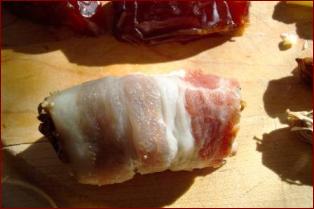
What would you call these little tapas? What sobriquet could possible do justice to dates, stuffed with cheese, then wrapped in bacon? I pieced these together for February's Spanish/Tapas-themed food club. On my way over, I toyed with calling them Dates in A Pig Blanket, but that didn't seem terribly appealing. But when I got to food club, I was overjoyed to learn that these sweet and salty delicacies are known in some circles as Persians on Horseback. Perfect!

(Stay tuned for paella and more from food club!)

***
Persians on Horseback
(inspired by Jaleo's Dátiles con tocino como hace todo el mundo)

Have ready:
12 Medjool dates
2 ounces Manchego (or other hard, dryish cheese, I used smoked gouda)
1 lb. bacon

Preheat the oven to 500 degrees. Cut in each date in half and remove the pits. In each date half, place a small sliver (about half the size of the removed pit) of cheese:

(Apologies for the Georgia O'Keefe vibe, folks)

Press the edges of the date together to seal the cheese inside.

Wrap each halved, stuffed date in half a slice of bacon. (Note: This will seem like too much bacon, but use it all or your wrapping will come undone in the heat of the oven!).

Place the bacon-wrapped dates, seam side down, on a foil-covered cookie sheet. Bake for about 5 minutes, then turn and bake for 2-3 minutes more. Keep an eye on these little guys—they go from deliciously crispy to blackened quickly. Let them cool for a few minutes (these tapas redefine "hot date"!), then serve warm.

Enjoy as part of a delicious tapas feast!

Monday, February 06, 2006

Construction In Progress

ToastPoint is getting a new look!

There may be some disruptions in service. Just imagine that ToastPoint is in the ladies room, powdering its virtual nose. I'll be ready soon, I promise.

Sunday, February 05, 2006

"Homemade" Scones on a Snowy Morning


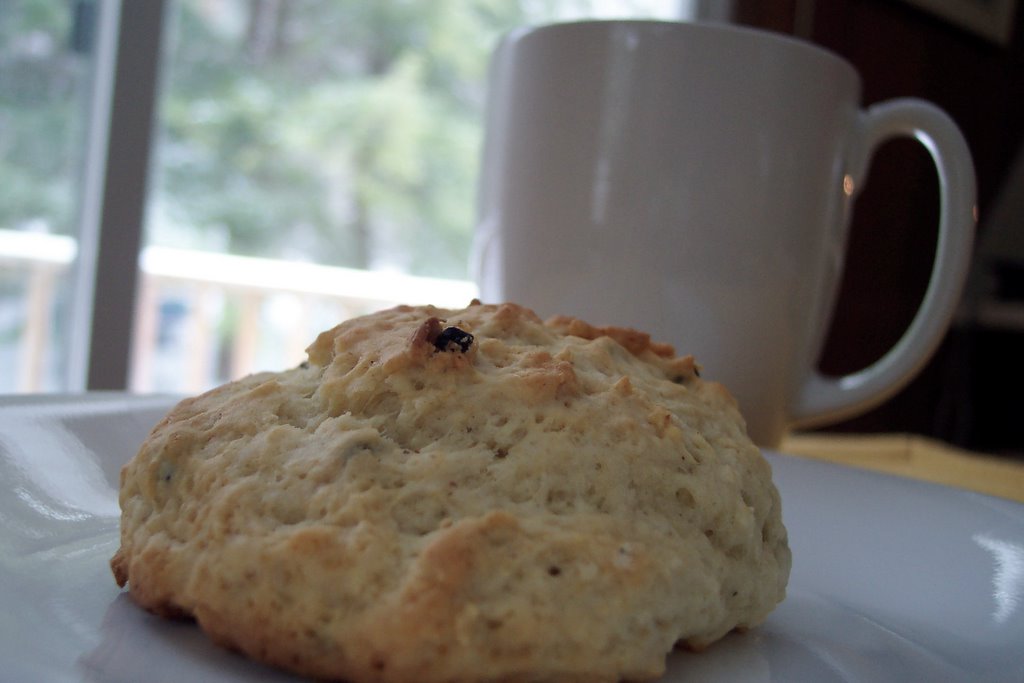
Things taste better when you make them from scratch. I believe that in theory--really I do. But I woke up this morning and it was snowing. I pulled on jeans and wandered into the kitchen of my mom's new house in the mountains. There was a note announcing the presence of hot coffee, weighted down by a little brown paper bag of scones mix*. Three quarters of a cup of water and 12 minutes later, I was sucking down steaming scones and coffee while looking out at the swirling snow. All thanks--as the Human Vacuum put it--to "an assist" from Sticky Fingers Bakery.

*In my defense, the Sticky Fingers people are pretty tetchy about the fact that their mixes only contain stuff you could actually have in your cabinet. Except, y'know, that I've never actually had black currants in my cabinet.

Friday, February 03, 2006

Bourbon Pear Apple Sauce


Continuing in the week's unofficial theme of 80-proof cookery, I present a stolen recipe for applesauce spiked with booze.

The recipe should be credited entirely to my college roommate. An elegant woman of French extraction, she periodically imported flour from her native land ("American flour just isn't quite right") so that we could host authentic crepes parties in our off-campus apartment. She was the mastermind and the master chef, I was sous chef. And one of the primary responsibilities of the sous chef was the peeling and coring of pounds and pounds of apples for sauce. It seemed like an endless pile of fruit, but guests were always scraping the bottle of the bowl by the end of the evening. Make as much of this as you can bear to, you won't regret it.

The key--as is so often the case in French cooking--is judicious use of butter and a splash of alcohol. Each apple slice spends a minute or two caramelizing in the skillet before going into the oven to soften. For the tipple, the French Roommate used Calvados, and I recommend that highly. But if all you have around is good ol' American Jim Beam, well, he'll get the job done. I've also tweaked the recipe by adding pears, but it's equally delicious with apples alone.

***
Bourbon Pear Apple Sauce

Preheat the oven to 350 degrees. Find a large pot with a lid, like a casserole or a dutch oven, and put it in the oven to warm.

Peel, core, and cut into 1/2 inch wedges:
8 sweet red apples (I used Pink Ladys, but Fujis or Galas would be excellent)
8 pears (I used Cornice)

Have ready:
1 teaspoon cinnamon
1 teaspoon nutmeg
6 Tablespoons unsalted butter
1/2 cup bourbon, or Calvados (plus extra for sipping while cooking)
1 large orange, juiced (reserve zest for later)

Warm the largest skillet you own over medium-high heat. Melt a pat of butter into the skillet and add just enough fruit to fill the pan with one layer. Cook, undisturbed, until lightly browned (about 1-2 minutes), then flip to brown the other side. I find that the easiest way to do this is with two forks--that way you're not chasing buttery apples around the pan with a spoon. Repeat.

I added different flavored ingredients from the list above to each batch of fruit to amuse myself, but you can do this in any order or process you want, since it's all going to meld together in the oven anyway. So, in one batch I added few glugs of bourbon and let it cook down. In another, I sprinkled on nutmeg and let it toast a bit in the pan, clinging to the fruit. In another, I juiced the orange and watched it soak into the apple slices while the rest disappeared in a hiss of fragrant steam. You get the idea. There should be a little butter in each batch to prevent scorching.

When each batch is sufficiently brown and flavorful, slide them into the large pot waiting in the oven. When all the batches are done, add the orange zest and stir to combine. If you're concerned that your apples are too tart, at this stage you can add maple syrup, or brown sugar. If you're using pears, this shouldn't be necessary.

Bake for about an hour--less if you like chunky, more if you prefer homogeneously smooth.

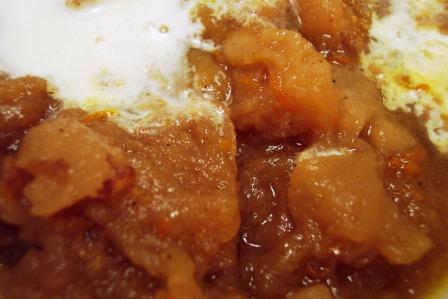
I served the resulting sauce warm, spooned over gingerbread and topped with heavy cream. But it would be just as good taken straight up (so to speak), and it keeps well in the fridge.


Sunday, January 29, 2006

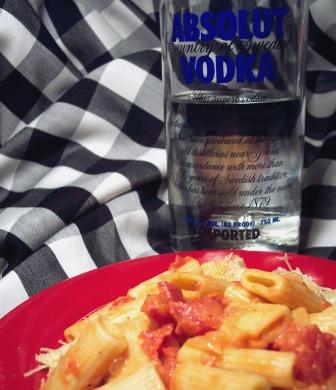
Absolut Pasta: IMBB #22


I'm not sharing this pasta recipe because it is an original, or especially creative use of noodles. I am posting it because it is obscenely delicious. Also, you can get drunk by eating it.

The sauce is finished in the amount of time it takes to boil water and cook pasta--a major bonus in my book. And, as Nigella notes, it's especially good as cold leftovers, which is fortunate because it's rather rich. She also notes that this sauce is "amusingly retro--think 1960s Rome." Retro pasta that gets you drunk and can be made in minutes: What's not to love?

***
Penne alla Vodka
(adapted from Nigella Lawson's "Feast")

Put on a large pot of water to boil for the pasta.

In another heavy-bottomed pan, warm over medium heat:
2 Tablespoons garlic oil (or 2 Tablespoons olive oil with minced garlic)

Finely dice:
One large onion
A pinch of salt

Add to the oil and cook until soft and just beginning to caramelize, stirring occasionally, about 15 minutes.

Add:
2 14 ounce cans chopped tomatoes
Cook over medium-low heat for another 15-20 minutes.

Add:
2 Tablespoons heavy cream, or 1 1/2 Tablespoons creme fraiche
Stir to combine, then remove from heat.

When the water boils, add:
A pinch of salt
1 lb. penne or other similar pasta (I used rigatoni)
Cook until very al dente, then drain and return to the pan.

Add:
1/2 cup vodka
3 Tablespoons unsalted butter

I know it seems odd to add that much vodka to your pasta, but it really works. If you're squeamish, you can add the vodka to the tomato sauce to cook off the alcohol, you wimp. Stir until the pasta is coated and strangely fragrant buttery vodka fumes begin to rise enticingly from the pan. Tip in the tomato sauce and stir to combine.

Serve immediately, with grated parmesan cheese for sprinkling on top.

Tagged with: +

Friday, January 27, 2006

Unrefined Haroset: SHF#14


As I've noted before, I'm a great fan of cooking out of season (besides Aunt Ester's sugar cookies, of course) so I'm not embarrassed to admit that the recipe below is traditional Passover food.

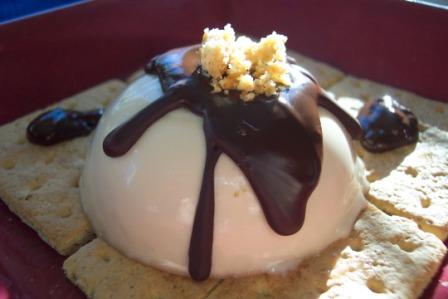
I've been hoarding a recipe for haroset from A Finger in Every Pie since last Passover. Now seemed like a good time to break it out, because Sam at Becks&Posh is hosting Sugar High Friday, with a paradoxical challenge to make a dessert minimizing the use of refined sugar. This haroset is tooth-numbingly sweet without the help of a single grain of sugar. In the photo above, you'll see that I've served it on a leftover panna cotta. To better fit the spirit of this virtuous SHF, though, it happily stands alone in tiny quantities, or spread on (sugar-free) matzohs.

Haroset is promiscuously symbolic. It stands for all sort of different things depending on which tradition you're working from, or what the person in charge of discussing the various symbols feels like talking about. The one I like the best is that the fruit and honey are supposed to sweeten our lives, to make easier the bitter things in life, and to remind us of things that are already sweet about our existence. That's a thought worth reflecting on at the dinner table anytime, I say.

This recipe is in the Sephardic tradition. The Ashkenazi recipe seems to be simpler--apples, honey, nuts--and chunkier. My Jewish mother-out-law makes a nice version with which I would rather not compete.

***
Venetian Charoset or Haroset
adapted from "The Jewish Holiday Kitchen" by Joan Nathan (Schocken Books)

1/2 cup chestnut paste
2 figs, chopped
1/2 cup chopped almonds
1/2 cup pine nuts
Grated rind of one orange
1/4 cup chopped dried apricots
1/2 cup brandy or sherry
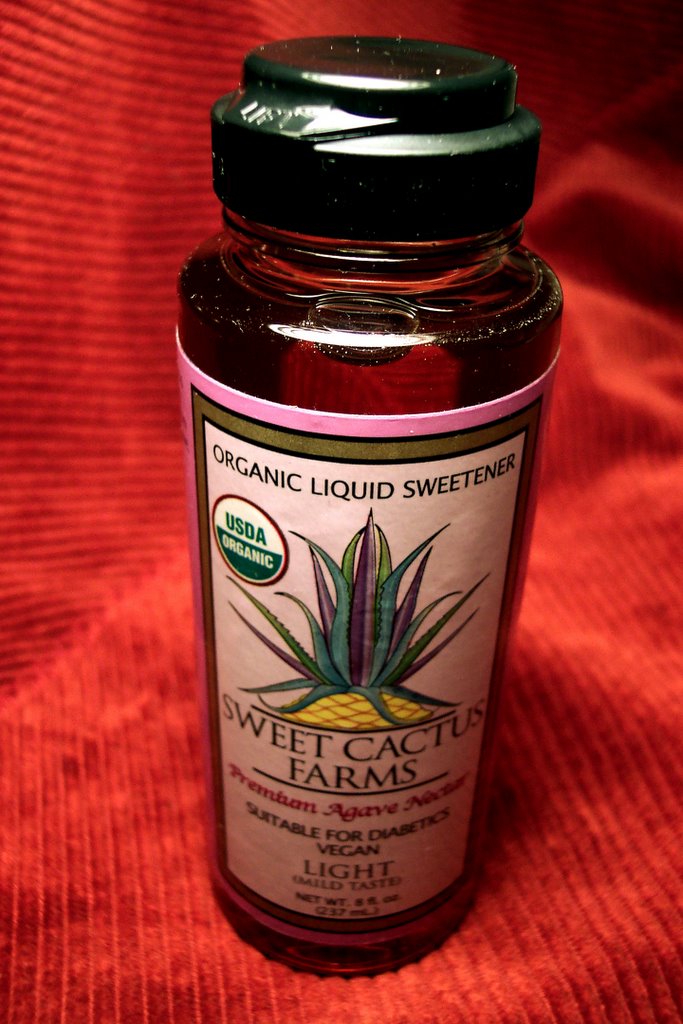
Honey (or, in my case, agave nectar*) to bind

Combine all the ingredients except the booze and stir. Add liquid until the mixture sticks softly together. Chill. Serve garnished with toasted white sesame seeds.

*Agave nectar is neat stuff. It's extracted from the same wonderful plant that gives us tequila (surely evidence that there is indeed a just and merciful god). It has a low glycemic index, which makes it a handy sugar substitute for diabetics. It's parve, which makes it kosher (so to speak) for the haroset. It's also 30% to 40% sweeter than sugar, so you don't have to use much, and low-calorie to boot. All of which is in keeping with the general effort at healthy alternatives to sugar that made this Sugar High (Low) Friday an interesting challenge.

Tagged with: +

Thursday, January 26, 2006

Smoky Lapsang Souchong Panna Cotta S'mores


I walked home last night, squinting against the freezing January wind, and thinking about the tiny silver tin of lapsang souchong tea in my satchel. As I pondered the lovely, smoky flavor of the tea (arrived that very day from Tea Chef), I was hit by a August memory of hallucinatory intensity: S'mores. I could almost taste the marshmallow, silky within and smoked-stained on the outside, hot enough to melt two squares of chocolate, and insulated by bready sweet graham crackers.

Inspired by that warming thought, and a recent encounter with thai coffee panna cotta, I set out to capture a summer campfire dessert using that crucial mid-winter staple: tea. I wound up decanting a mound of chilled panna cotta flavored strongly with lapsang souchong and vanilla onto a mosaic of warm graham crackers and drizzling melted dark chocolate on top. The tea made the panna cotta sweetly smoky, tinted it an appealing warm brown, and cut the richness of the cream. And the s'mores experience was excitingly reversed--the creamy, smoky element was cold and soothing, while the crackers and chocolate provided heat and texture.

The results were marvelous, even if I do say so myself. I'll certainly make this again. It was easy, and would be simple to make ahead and have ready for an impressive end to a small dinner party.

I'm late in submitting this to the TeaChef contest, so it probably won't be included, but go check out the other entries for cooking with lapsang souchong anyway, and vote for your favorite. (UPDATE: It's up! Now your choice is easy--vote for me!)

***
Smoky Lapsang Souchong Panna Cotta S'mores

In a small bowl, combine but do not stir:
1 packet unflavored gelatine (2 1/4 teaspoons)
4 Tablespoons cold water

While that rests, combine in a saucepan over medium-high heat:
1 cup heavy cream
4 Tablespoons sugar
1 teaspoon vanilla extract (or one vanilla bean, split)
2-3 Tablespoons lapsang souchong tea leaves

Heat gently until the mixture begins to barely simmer, then cook for 5 minutes more, stirring occasionally. The cream should take on a light brown color from the tea as it steeps. Add the bowl of gelatine and water and stir for about one minute until fully incorporated.

Strain out the tea leaves (and vanilla bean, if using) and pour the warm mixture into ramekins, tea cups, champagne bowls (that's what I used), or whatever you have around. Chill for several hours, or overnight.

To serve:
Arrange graham crackers on a plate and microwave for 15 seconds. Briefly dip the chilled panna cotta mold into very hot water (no more than 10 seconds, or the contents will become a melted puddle) and then invert over the graham crackers. Note: If you're worried about turning the molds out onto a plate, they could be served as is, in little cups for your guests to dig into.

Drizzle melted dark chocolate or hot fudge on top, and crumble 1/8 of a graham cracker for decoration. Serve immediately.